

Food production is undergoing a quiet but powerful transformation. As climate change, water scarcity, and shrinking arable land put pressure on traditional farming, a new approach is gaining ground — literally and figuratively. Indoor farming is emerging as one of the most promising solutions to grow fresh, nutritious food closer to where people live, using a fraction of the land and water that conventional agriculture requires.
In this article, we’ll explore what indoor farming really means, why it matters now more than ever, and how it’s set to reshape the future of food — especially in a country like India, where agriculture faces some of its toughest challenges yet.
What is Indoor Farming?
Indoor farming refers to the practice of growing crops inside a controlled structure — a warehouse, greenhouse, shipping container, or dedicated facility — rather than in open fields. It falls under the broader umbrella of Controlled Environment Agriculture (CEA), a system where variables like temperature, humidity, light, CO2 levels, and nutrient delivery are precisely managed to create ideal growing conditions year-round.
Unlike traditional farming, which is at the mercy of weather, seasons, and soil quality, indoor farming uses technology to create a stable, optimized environment. This often includes:
- Vertical Farming – stacking crops in layers to maximize yield per square foot
- Hydroponics, Aeroponics, and Aquaponics – soil-free growing methods that use nutrient-rich water or mist
- LED Grow Lights – tuned to specific wavelengths that plants need for photosynthesis
- Climate Control Systems – maintaining consistent temperature and humidity regardless of the season outside
The result is a farming system that can operate anywhere — from urban basements to desert regions — and produce clean, pesticide-free food with remarkable efficiency.
Why Traditional Agriculture Is Facing Challenges
To understand why indoor farming is gaining momentum, it helps to look at the pressures facing conventional agriculture:
- Climate Unpredictability – Erratic rainfall, heatwaves, and shifting seasons make crop planning increasingly difficult.
- Land Scarcity – Urbanization is eating into farmland, especially near growing cities.
- Water Stress – Traditional farming consumes nearly 70% of the world’s freshwater, and many regions are running low.
- Soil Degradation – Decades of intensive farming have depleted soil nutrients, reducing long-term productivity.
- Supply Chain Losses – A significant percentage of produce is lost between farm and consumer due to long transportation distances and poor storage.
These challenges are pushing farmers, agri-entrepreneurs, and governments to look for sustainable agriculture models that can deliver more food with fewer resources — and that’s exactly where controlled environment systems shine.
Benefits of Controlled Environment Agriculture
Controlled Environment Agriculture isn’t just a trend — it’s a practical response to real-world constraints. Here’s why it’s becoming a preferred model for the future of farming:
- Up to 95% Less Water Usage – Closed-loop irrigation systems recycle water, drastically cutting consumption compared to open-field farming.
- Year-Round Production – No more waiting for the “right season.” Crops can be grown consistently, 12 months a year.
- Higher Yields Per Square Foot – Vertical stacking and optimized growing cycles mean more produce from less space.
- No Pesticides Needed – A controlled indoor environment naturally keeps pests and diseases at bay, resulting in cleaner, chemical-free produce.
- Reduced Transportation Costs – Indoor farms can be built close to urban centers, cutting down on the distance food travels from farm to plate.
- Climate Resilience – Since growing conditions are fully controlled, external weather events have little to no impact on production.
This combination of efficiency, quality, and resilience is why smart farming technologies are being adopted rapidly across the world, from Singapore to the Netherlands to the United States.
Role of Biotechnology in Indoor Farming
Biotechnology is the engine driving much of the innovation inside indoor farms today. From tissue culture propagation to precision nutrient formulations, biotech tools are helping growers achieve consistency and scale that were previously impossible.
Some key applications include:
- Tissue Culture Techniques – Producing disease-free, genetically consistent plantlets at scale
- Microbial Inoculants – Enhancing nutrient uptake and plant immunity without synthetic chemicals
- Precision Nutrient Formulations – Customizing feed solutions based on real-time plant data
- Genetic Selection – Choosing plant varieties best suited for indoor, low-light, or compact growing systems
By merging biotechnology with controlled environment systems, growers can produce food that is not only more abundant but also more nutritionally consistent and safer for consumption.
Microgreens and Medicinal Mushrooms
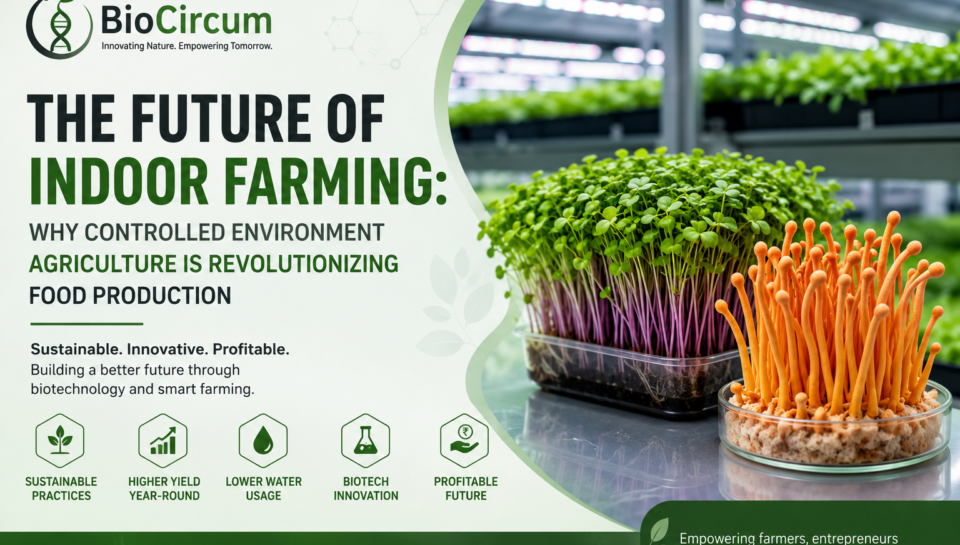
Two categories of crops have become flagship products of the indoor farming movement: microgreens and medicinal mushrooms.
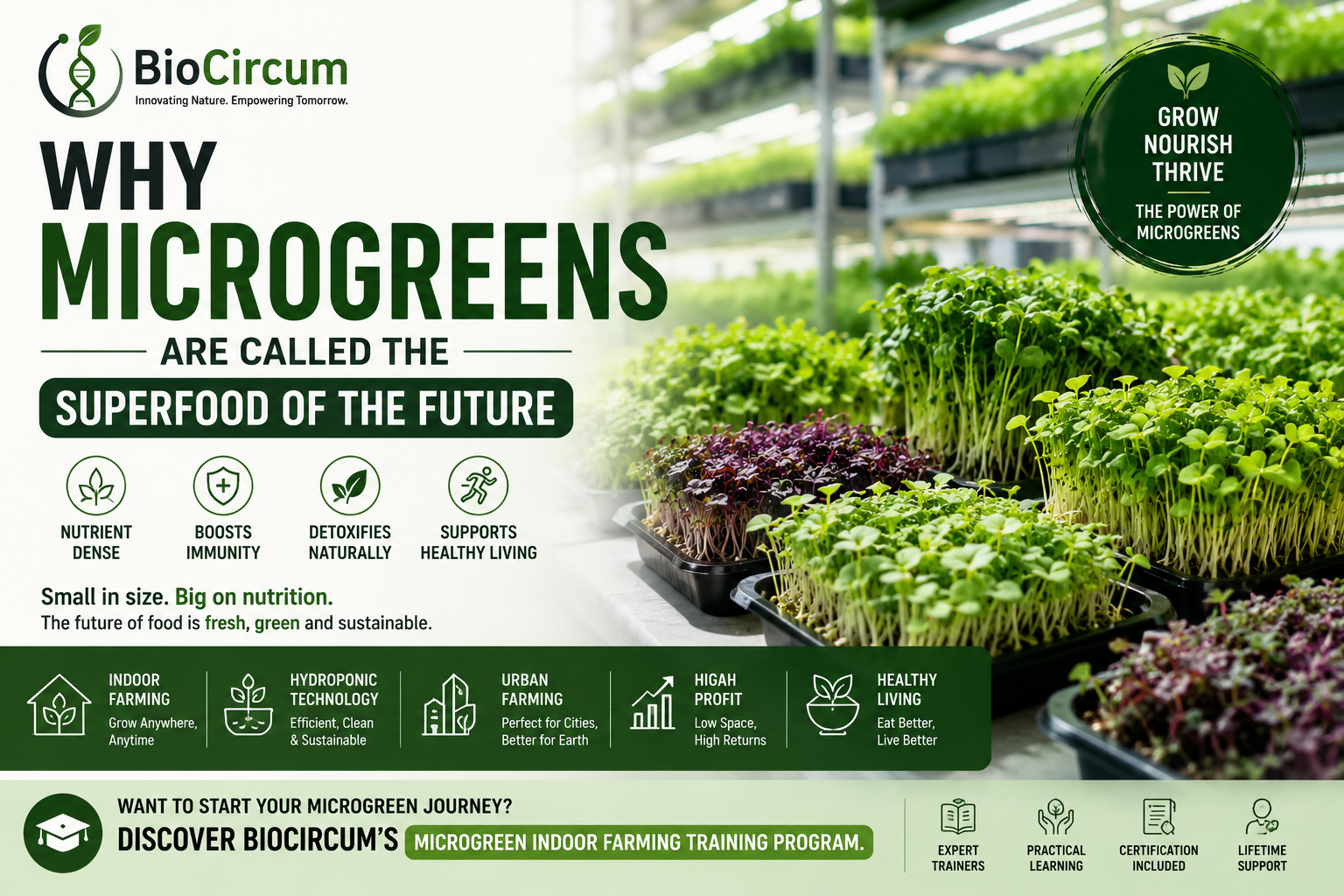
Microgreens — the young, nutrient-dense seedlings of vegetables and herbs — are perfectly suited to indoor cultivation. They grow fast (often within 7–14 days), require minimal space, and pack significantly more vitamins and antioxidants than their mature counterparts. Restaurants, health-conscious consumers, and nutrition-focused startups are driving strong demand for locally grown microgreens.
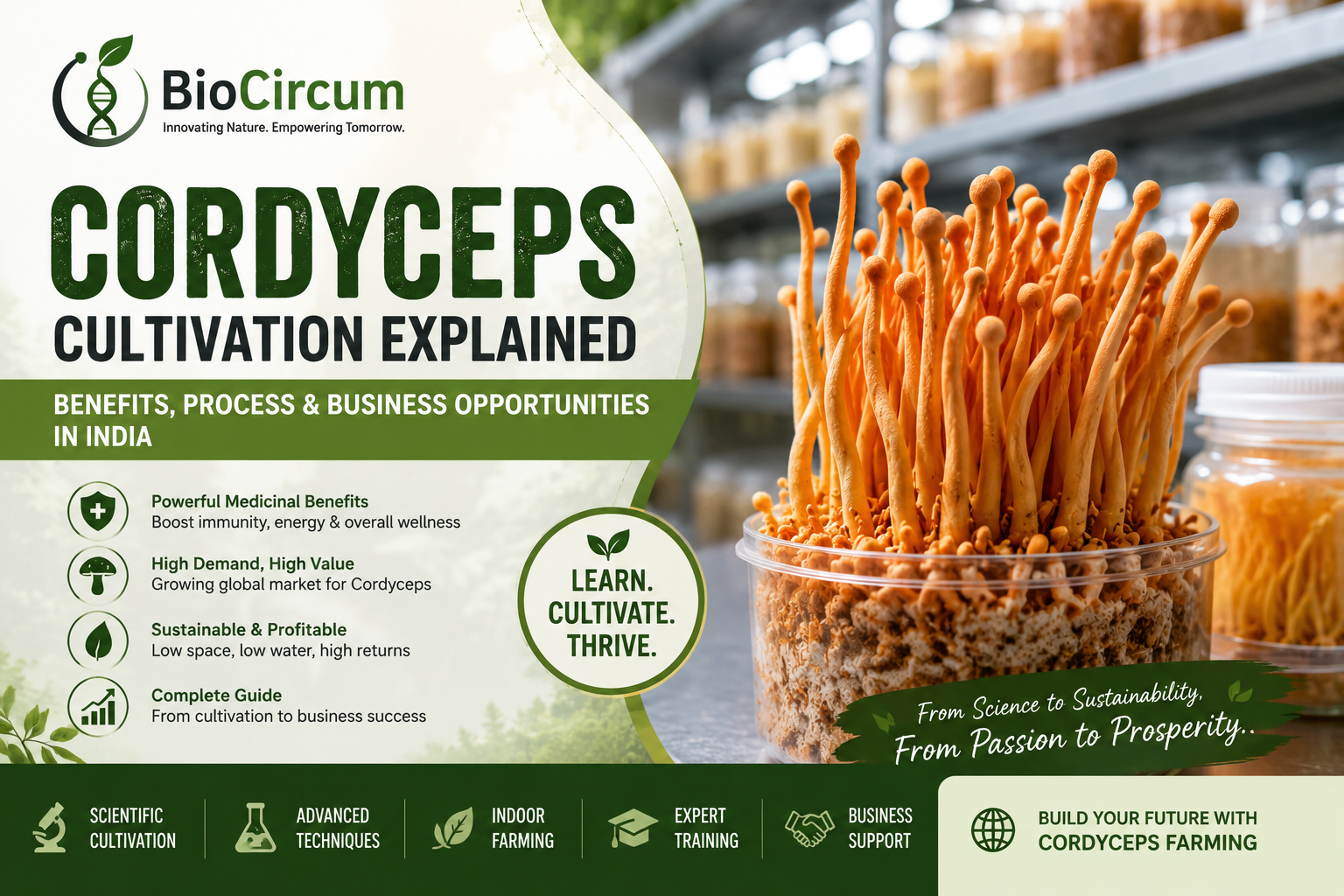
Medicinal mushrooms, such as Lion’s Mane, Reishi, and Cordyceps, are another rapidly growing segment. These require very specific humidity, temperature, and light conditions — something nearly impossible to guarantee outdoors, but easily achievable in a controlled indoor facility. With rising interest in natural immunity boosters and functional foods, medicinal mushroom cultivation is becoming a lucrative niche within the indoor farming space.
Together, these crops demonstrate how indoor farming isn’t just about staple vegetables — it’s opening doors to high-value, health-focused produce categories.
Future of Indoor Farming in India
India presents a uniquely compelling case for indoor farming. With a large urban population, increasing health awareness, and mounting pressure on agricultural land and water resources, controlled environment agriculture is well-positioned to play a major role in the country’s food security strategy.
Key trends shaping this future include:
- Urban Agri-Startups – Cities like Bengaluru, Pune, and Delhi-NCR are seeing a rise in vertical farming startups supplying fresh produce directly to consumers.
- Government Support for AgriTech – Increasing policy attention and funding opportunities for sustainable and tech-driven agriculture.
- Growing Demand for Clean Food – Urban consumers are actively seeking pesticide-free, traceable produce.
- Skill Development Needs – As the sector expands, there is rising demand for trained professionals who understand both the biology and technology behind indoor farming systems.
As awareness grows and technology becomes more affordable, indoor farming in India is expected to move from a niche experiment to a mainstream component of the country’s agricultural landscape.
How BioCircum Supports Sustainable Agriculture
At BioCircum, we believe the future of food lies at the intersection of biotechnology and smart agricultural practices. Our work focuses on equipping individuals and organizations with the scientific knowledge and hands-on skills needed to succeed in controlled environment agriculture — from understanding plant biology and hydroponic systems to mastering microgreen and medicinal mushroom cultivation techniques.
Whether you’re an aspiring agri-entrepreneur, a student exploring biotechnology, or an organization looking to build a sustainable food production unit, BioCircum is committed to bridging the gap between scientific innovation and practical, real-world application.
Ready to Be Part of the Indoor Farming Revolution?
The shift toward controlled environment agriculture is not a passing trend — it’s the foundation of a more resilient, sustainable, and efficient food system. As demand for clean, locally grown produce continues to rise, the opportunities in this space are only expanding.
Want to learn indoor farming from experts? Explore BioCircum’s professional training programs and take the first step toward building your future in sustainable agriculture.